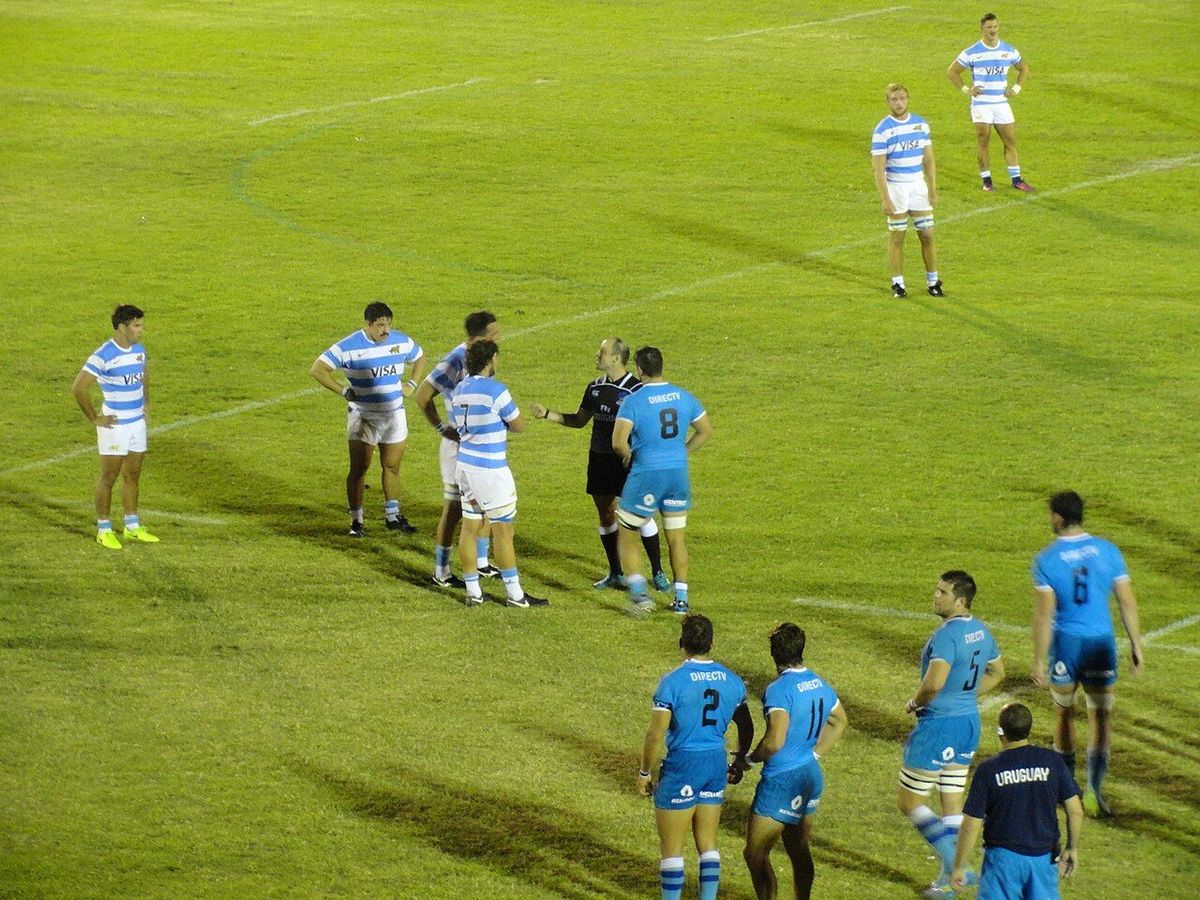
Yellow and red cards look similar on television, but what happens next is very different, and the rules around them have changed in recent years. Here is how the sin bin, the card system and the post-match process work.
Yellow cards and the sin bin
A yellow card sends a player to the sin bin for ten minutes of playing time in fifteen-a-side rugby union; in rugby sevens, the sin bin lasts two minutes. The player's team plays on a player short but is not otherwise penalised, and the player returns once the time has elapsed. Some competitions also use a Foul Play Review, sometimes called the "bunker": if match officials cannot decide on the field whether an incident is worth a red card, they sin-bin the player for ten minutes while an off-field review official examines the footage and either confirms the yellow card or upgrades it to red. This process has been used at the men's and women's Rugby World Cups, the Women's Six Nations and other elite competitions, though not every competition uses it.
Red cards and the 20-minute trial
A straight red card is a permanent dismissal for the rest of the match, and the team plays on with one fewer player. Since 2025, a separate law trial has allowed a "20-minute red card" in some elite competitions, including the Six Nations, the United Rugby Championship, Super Rugby Pacific and the Rugby Championship: a player sent off for a technical or non-deliberate offence can be replaced by a team-mate after 20 minutes, so the side is not left short-handed for the rest of the match, although the sent-off player takes no further part. Deliberate and dangerous foul play still draws a full red card with no replacement. This remains a trial, and World Rugby is still assessing whether to keep it, so readers should check World Rugby's current law trials for the competitions they follow.
After the match
A red card, and some cited incidents not fully dealt with during the match, can lead to a disciplinary hearing under World Rugby's Regulation 17 or the relevant union's own process, which can result in a suspension of one or more matches depending on the offence. In community and grassroots rugby in Wales, discipline for cards and citings is handled through the WRU's own disciplinary regulations, and clubs and players should refer to the WRU directly for the current process.
For spectators, the practical rule is simple: yellow means ten minutes, or two in sevens; red means the rest of the match; and any video review or later hearing exists to confirm that decision, not to change what happens on the pitch for the remainder of the game.