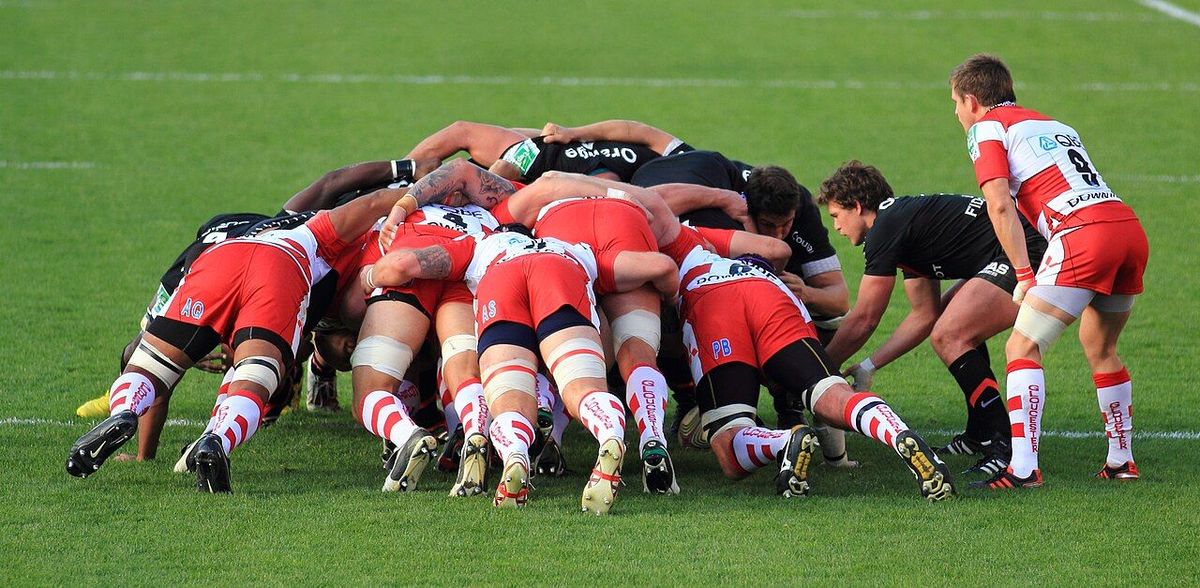
A rugby scrum is the set-piece used to restart play after a minor interruption. Unlike the more action-packed parts of the game, a scrum doesn't start with aggression - instead, it's carefully structured with safety at its heart.
What a Scrum Is
A scrum is made up of eight players from each team, who bind together in 3 rows. This puts both sides on an equal footing to restart play under strict rules. World Rugby publishes the full law online at laws.worldrugby.org. The scrum's purpose is to restart play after a minor stop like a knock-on, with the side that didn't cause the stoppage putting the ball in.
The Eight Players and How They Bind
The scrum has a full-forward formation, with each side contributing:
- 1 loosehead prop
- 1 hooker
- 1 tighthead prop
- 2 locks
- 2 flankers
- 1 number eight
The scrum starts with the referee's call to "crouch, bind, set". At each call, the players move to a new stage that binds the two packs together into a single, stable formation.
- Crouch: The front row players crouch in three-point contact, dropping to bent knees with their heads and shoulders no lower than their hips
- Bind: Still at three-point contact, the players bind onto their opposite players. The tighthead prop binds with the loosehead of the other side, looping their arms around the other
- Set: Once the bindings are complete, the referee calls "set" and the packs push against each other
At "set", the scrum-half from the team that did not cause the stoppage feeds the ball into the tunnel between the two front rows. The two hookers then compete to hook the ball back with their feet for their team to win.
Why Scrums Get Stopped, Reset or Penalised
Scrums in rugby are precisely governed to maintain safety, and the referee acts on these infractions:
- Collapsing the scrum, which is penalised
- Wheeling the scrum more than 90 degrees, which ends it and leads to a new scrum
- Pushing into the scrum before the ball is introduced
The referee uses the call "reset" to take the scrum back to stability. If it can't be reset, they'll usually call a free kick or penalty to restart away from the offending team. If either side cannot field suitably trained front-row players, the scrum becomes uncontested, a safety rule rather than a tactical choice. Community and age-grade rugby in Wales use modified engagement guidance, and current regulations should be checked with the WRU.