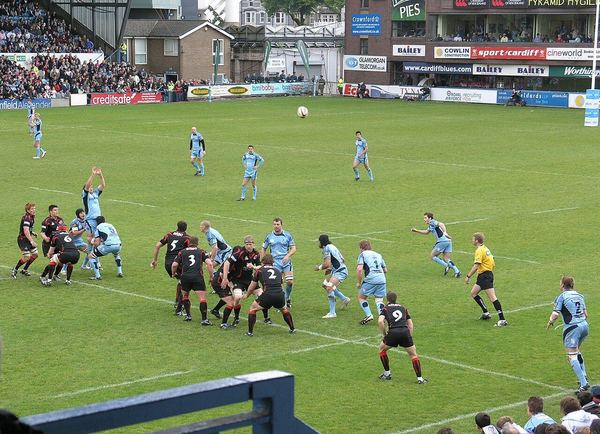
Watching a rugby union match for the first time, the shirt numbers are the quickest way to work out who does what. World Rugby's laws split the starting fifteen into eight forwards and seven backs, and a standard numbering convention, set out in World Rugby's Regulation 15, runs from 1 to 15 for the starting side and 16 to 23 for the replacements.
The forwards, numbers 1 to 8
The front row is 1 (loosehead prop), 2 (hooker) and 3 (tighthead prop); they pack down together and bind onto the opposing front row to form a scrum. Behind them, the second-row locks wear 4 and 5, adding height and power in the scrum and at the lineout. The back row completes the pack: 6 and 7 are the flankers, and 8 is the number eight, who packs down at the rear of the scrum and often controls the ball there. Forwards do most of the close-contact work at scrums, lineouts, rucks and mauls, and their build tends to favour strength and size, though this is a general pattern rather than a rule.
The backs, numbers 9 to 15
The scrum-half (9) links forwards and backs, usually feeding the scrum and passing from rucks; the fly-half (10) organises attacking play and often takes on the kicking duties. Together they are the half-backs. The centres, 12 (inside) and 13 (outside), run midfield attacking lines and add a layer of defence in front of the wings. The wings, 11 and 14, play out wide and are usually a side's fastest finishers, while the full-back, 15, covers behind the back line, fields kicks and joins attacks from deep. As with the forwards, this numbering is a naming convention rather than a physical description written into the laws.
Replacements, numbers 16 to 23
Match-day squads carry up to eight replacements, numbered 16 to 23. Two of them, 16 and 17, are the specialist front-row replacements, and forwards are numbered before backs among the rest of the bench. Front-row cover is taken seriously because scrums are refereed as a contested set-piece: if neither side can field enough suitably trained front-row players, the scrum switches to uncontested, which is a safety rule rather than a tactical choice.
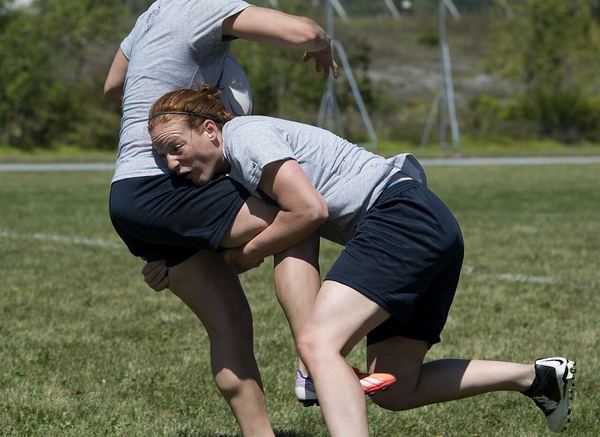
None of this numbering is fixed as physical description — it is simply where a player starts. Once the match is under way, players from any position can end up carrying the ball, tackling or supporting anywhere on the pitch. Learning the numbers is the first step to reading the game; the next is watching what each of the fifteen players actually does when the ball arrives. The current numbering rules and any exceptions for a specific competition are published by World Rugby.