Lineout tactics and laws explained
22 November 2026
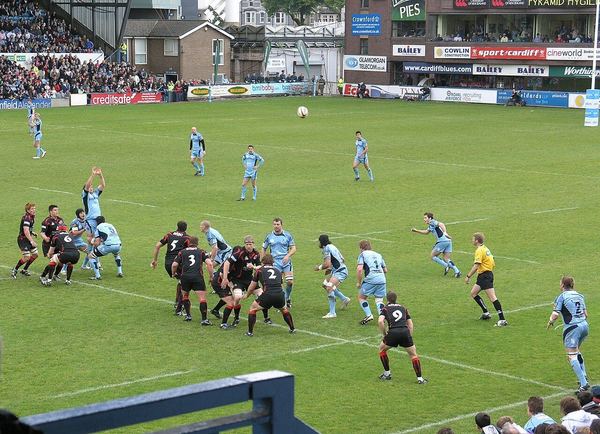
The lineout is a set piece in rugby union explained by world.rugby that occurs when the ball goes into touch. In a lineout, the forwards from both teams assemble in two lines perpendicular to the touchline, one metre apart, and the ball is thrown in by a player from the throwing team. The objective of the lineout is to win possession of the ball in the lineout and then to move it quickly into the open field, where the backs can use the space created by the concentration of forwards in the lineout.
The number of players in a lineout is determined by the throwing team under World Rugby law, with a minimum of two players from each team required. The lines must be parallel to the mark of touch and half a metre from it, between the five-metre and 15-metre lines. The receiver from the non-throwing team must stand between the five-metre and 15-metre lines, at least two metres away from team-mates in the lineout.
The thrower stands on the mark of touch with feet on or behind the touchline and throws the ball in straight along the mark of touch, aiming for a teammate in the lineout. The ball must reach the five-metre line before it hits the ground, and once it leaves the thrower's hands, the lineout has commenced.
A lineout ends when the ball or a player in possession leaves the lineout, enters the area between the touchline and the five-metre line, or goes beyond the 15-metre line. Participating players may move beyond the 15-metre line after the ball has been thrown in, but if the ball does not go beyond the 15-metre line, they must immediately return to the lineout. Non-participating players must remain at least 10 metres from the mark of touch on their own team’s side, or behind the try line if nearer.
The ball in a lineout may be caught by a player, lifted and caught by a teammate, or knocked down by an opponent. The player who catches the ball may pass it to another player in the lineout, or keep it and set up a maul. The receiver can also take the ball from the lineout and pass it on.
Strategic setups
The type of lineout depends on the throw length and the movement of the players.
Forward lineouts, where the team is moving forward into the set piece, are often used for quick ball and to catch the opposition off guard. Backward lineouts, where the team is moving backward into the set piece, are often used for safer ball and to set up a maul.
A shortened lineout, where fewer players are used, can be an effective tactic against a strong opposition lineout defence. It can also be used to create different attacking shapes in midfield.
Lineout codes
Teams use lineout calls so players know the planned jumper, the intended action, and the follow-up play. For officials on passport.world.rugby, the key objectives are to ensure a clear gap between the lines, to spot offences across the line of touch, and to maintain offside lines for participating and non-participating players.
Common tactics
The defensive team may try to disrupt the lineout by contesting in front of the attacking jumper or by using two lifters to support the defensive jumper.
The lineout is a contest for possession, where speed of thought and movement can allow the opposition to turn it over. Teams must be aware of the 30-second limit to form the lineout and must take the throw without delay once the lineout is formed.
Players can change roles and positions during the lineout, and communication is important for a safe and effective lineout.
| Throw length | Movement |
|---|---|
| Front | Jumping on the spot or jumping and driving forward |
| Middle | Jumping on the spot or jumping and driving forward |
| Back | Jumping and driving forward |
When the ball is thrown in, all lineout players are onside if they remain on their side of the mark of touch until the ball has been touched by a player or the ground. After that, the offside line is through the ball. Participating players may compete for the ball, catch or deflect it, lift or support a team-mate, leave the lineout to receive the ball within 10 metres of the mark of touch, or tackle a player in possession under specific conditions.