50:22 Rule Explained, Law, Tactical Kicking and Defence
11 November 2026
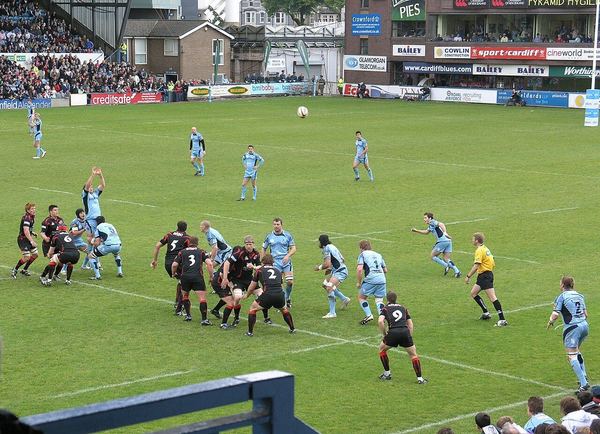
The 50:22 gives the team that kicks the ball a lineout throw deep in opposition territory, provided the kick starts in their own half and the ball goes into touch indirectly inside the opponents' 22. World Rugby's definition adds two conditions that referees watch closely: the ball must not have been passed or played back into the kicker's half, and it cannot be gained from a restart kick. Those few clauses have changed where wingers stand, how scrum-halves and fly-halves choose their kicks, and how much space opens up in midfield.
What the 50:22 law allows and the exact criteria
World Rugby's definitions of the laws spell out the 50:22 in one sentence. When a player in their own half kicks the ball and it goes indirectly into touch in the opposition's 22, the kicking team gets the lineout. The same wording appears in the full law book published on World Rugby's player passport site, so there is no gap between the shorthand used in commentary and the text a referee works from.
Each part of that sentence matters. The kick has to be made by a player standing in their own half, which is why the law takes its name from the two reference points on the pitch: the halfway line and the 22. The ball has to end up in touch inside the opposition's 22, so a kick that goes out on the halfway line or just outside the 22 earns nothing extra. And it has to go out indirectly. A kick that crosses the touchline without first touching the ground or a player in the field of play is an ordinary kick out on the full, with the usual consequences.
Then come the two exclusions. The ball must not have been passed or played back into the kicker's half, so a team cannot retreat with the ball, pick it up behind halfway and then claim the reward. Nor can the ball be gained from a restart kick, which rules out collecting a kick-off or a 22 drop-out and lifting it straight into the corner. In practice, this means the kicker needs open-play possession that began in a fair way, and the referee will check where the ball was kicked from as much as where it left the field.
Why World Rugby introduced the law
The stated aim was space. In its announcement of the global law trials in August 2021, World Rugby said it was trialling the 50:22 kick to create more space by encouraging the defending team to keep more players in the backfield. The logic is simple. If a team knows a well-placed kick can hand the opposition a lineout five metres from its own line, it cannot afford to leave the back of the field thinly guarded.
The Rugby World Cup's own explainer on the 50:22 makes the same point. It says the purpose of the law is to create space for teams to attack, because defensive teams are more likely to keep more players in the backfield. Every defender dropped out of the defensive line is one fewer to fill the gaps in front of the ball carrier. That is where the attacking gain lies, and it is why the law is as much about what a defence does before the kick as about the kick itself.
World Rugby's description of the trial also stressed that play had to originate inside the attacking team's half. That condition shows the law was designed as a reward for a specific, well-judged piece of play and not as a general licence to boot the ball downfield. A long kick that goes out in the opposition half still produces a lineout for the other side as before. Only the kick that finds the narrow target of touch inside the 22 earns the throw.
When the law was trialled and when it entered broader use
The 50:22 arrived as part of World Rugby's global law trials in 2021, a point confirmed in the Rugby World Cup explainer. The Telegraph had already reported in June 2021 that the trial would change international rugby, noting that it forced defending teams to drop a winger into the backfield to stop it. World Rugby's own announcement followed on 13 August 2021, and the Irish Rugby Union said the global law trials, 50:22 among them, had been in implementation since 1 August 2021.
That timeline matters for anyone comparing recent matches with older footage. A game from before August 2021 will not have the 50:22 in it, and a kick that would now earn a throw into the corner was then simply a kick into touch. Defensive formations from that era also look different, with fewer teams worrying about the back three being stretched by a long, rolling kick.
Trials do not always become permanent. On 12 May 2022, the World Rugby Council voted unanimously to adopt five welfare-driven global trials into full law from 1 July. That decision concerned a specific group of trials. The 50:22 itself now sits in the definitions section of the current law book, with the criteria set out in full, and it is applied as an established part of the game, not as an experiment.
How teams use the 50:22 in attack
Attacking sides treat the law as a way to turn a kick, normally a safe and fairly neutral option, into a platform for pressure. The Telegraph's early analysis of the trial said it forced defences to move a winger into the backfield, creating more space for the side in possession. Teams that can kick accurately from their own half are therefore trying to do two things at once: threaten the touchline and drag the defence out of shape before the ball is kicked.
The practical points for anyone watching, or coaching, can be gathered into a short list drawn from the law and the early commentary on it:
- Start the kick in your own half, with the ball not passed or played back into it.
- Do not rely on a restart kick, because a ball gained from one cannot earn the award.
- Aim for touch inside the opposition's 22, not just somewhere near the corner.
- Make sure the ball goes out indirectly, not on the full.
- Look for a defence that has not dropped a winger back, since that is where the touchline is most exposed.
The last of those is the tactical heart of it. A defence that has kept its numbers up in the line to protect against a ball-carrying threat is, almost by definition, short of cover behind it. A scrum-half or fly-half who spots a winger standing in the line, not covering the corner, has an opportunity. Even when the kick does not quite reach touch, the forced adjustment helps the attacking team, because the defenders have to decide what to give up. The reward for getting it right is a lineout in a place where the attacking team can set up a maul or a driven set-piece close to the opposition's line.
How defences adapt to stop the 50:22
The first response, noted in the Telegraph's report on the trial, was to take a winger out of the defensive line and drop him into the backfield. It is a simple change, but it carries a cost. A winger who sits deep is no longer standing at the end of the line, so the defence has to cover the same width of pitch with one fewer body, or ask a centre or back-rower to stretch further across.
That is the trade-off the law was built to create. World Rugby said it wanted defending teams to keep more players in the backfield, and the Rugby World Cup explainer ties that directly to more space for attackers. A defence must weigh protecting the touchlines against holding enough players in the line to stop a direct assault. Over-commit in the backfield and the line thins; keep the line strong and a clever kick can pick up the throw.
For supporters, the easiest way to see this is to watch the back three when the ball is in the opposition's half of the field and the other side is about to kick. If one winger has dropped back and the other has stayed up, the defence is hedging. If both are back, the attackers may find more room close to the ruck. Either way, the law has made the positions of players who are nowhere near the ball part of the story of every phase, and the next time a long kick bounces once and rolls out near the corner flag, check that it started in the kicker's half before you cheer.